








Othosololo - Ethiopia


Description
Why choose: Othosololo - Ethiopia
Othosololo
Ethiopia · Guji · Osolo Station / Daye Bensa
Process: Honey
Varieties: JARC 74158, 74112 & 74110
Altitude: 2,240–2,280 m
Region: Greitu Korsa, Guji, Oromia
Harvest: December 2025
In the cup
🍊 Juicy orange
🍇 Concord grape
🌸 Wildflowers
A bright, floral, and deeply sweet Ethiopian coffee.
Othosololo opens with an intense floral aroma before giving way to a lively orange acidity, a sweetness reminiscent of wildflower honey, and berry notes that evolve into Concord grape as it cools.
The body is silky and slightly syrupy, with the combination of floral, citrus, and red berry notes that is characteristic of great Ethiopian high-altitude coffees.
Othosololo, at over 2,200 meters above sea level
This lot comes from the Osolo station, located in the highlands of Greitu Korsa, in the Guji region of Ethiopia.
Perched between 2,240 and 2,280 meters of altitude, the farms that supply the station benefit from cool nights and particularly slow cherry maturation. These conditions promote the development of sugars and contribute to the remarkable aromatic complexity of the coffee.
Approximately 150 to 200 smallholder farmers from the surrounding communities of Wocho Sololo, Tabata, Mebocho, and Mender deliver their ripe cherries to the station.
Osolo works with Daye Bensa, an Ethiopian producer and exporter renowned for the quality of its Sidama and Guji coffees and multiple award winner at the Cup of Excellence Ethiopia.
Three varieties from Ethiopian research
Othosololo primarily combines the JARC 74158, 74112, and 74110 varieties.
Selected in the 1970s by the Jimma Agricultural Research Center (JARC), these varieties originate from indigenous Ethiopian coffee trees chosen for their resilience and cup quality.
Cultivated at very high altitudes in the Guji conditions, they develop a particularly expressive profile where citrus, berries, and flowers meet.
A precise honey process
After harvesting, only ripe cherries are selected and transported to the Osolo station.
They are then pulped without the use of water, retaining a significant part of the naturally sweet mucilage around the bean. Contrary to what its name might suggest, no honey is added to the coffee: the term "honey" refers to this sticky mucilage retained during drying.
The beans are then spread on raised African beds for 12 to 13 days, where they are regularly turned to ensure slow and even drying.
This method preserves the clarity and floral character typical of a great Ethiopian coffee while developing more sweetness, texture, and fruity intensity.
Why we love it
Othosololo combines several things we particularly look for in an Ethiopian coffee: very high altitude, emblematic JARC varieties, great aromatic clarity, and a well-controlled honey process.
The result is an expressive yet not overwhelming cup: floral when hot, bright with citrus, then increasingly sweet and fruity as it cools.
A coffee that constantly evolves in the cup and definitely deserves to be savored to the last drop.
Coffee Information
Country: Ethiopia
Region: Greitu Korsa, Guji, Oromia
Station: Osolo Station
Producer / Exporter: Daye Bensa
Producers: Approximately 150–200 smallholder farmers
Altitude: 2,240–2,280 m
Varieties: JARC 74158, 74112 & 74110
Process: Honey
Drying: 12–13 days on raised African beds
Harvest: December 2025
J’ai acheté ce café avec le Keramo et le La Cuna Del Sol. Il se démarque par ses notes d’agrumes qui sont accompagnées que d’une très légère acidité. Aucune amertume, ce café est d’une légèreté et d’une finesse surprenante. Seul la caféine vous retient de savourer une seconde tasse!
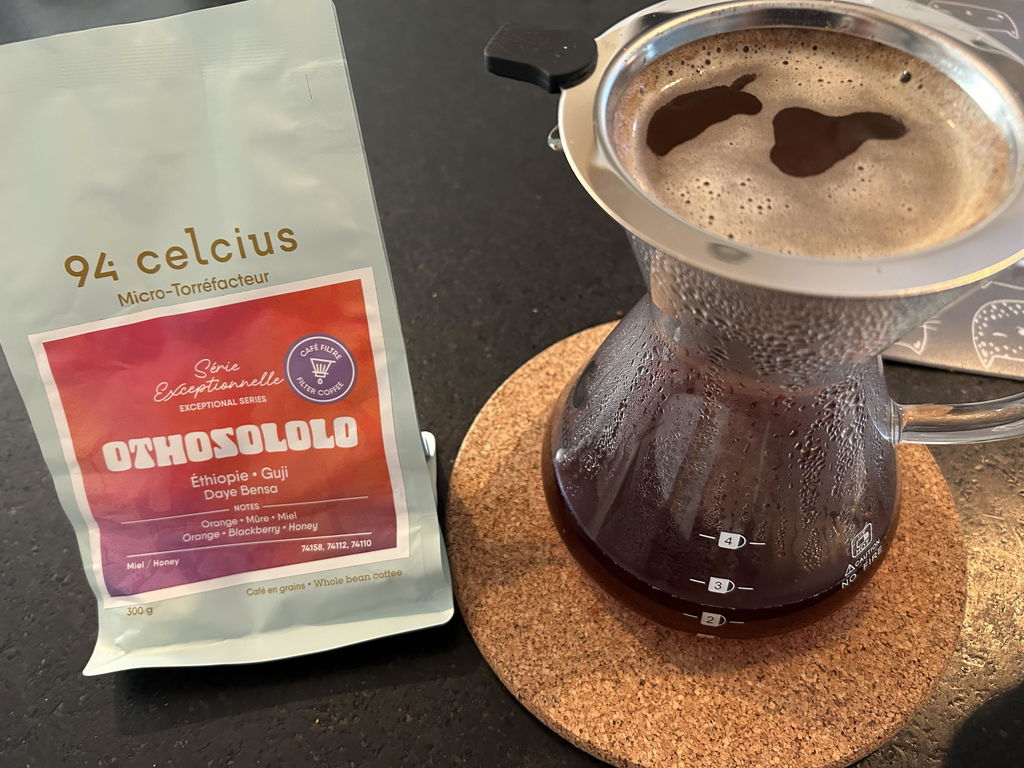
Le meilleur café que j’ai bu! Vraiment bon, c’est vrai que c’est dangereux à boire ;)
