







Why Colombia Produces Some of the Best Specialty Coffees in the World (and why it's at the heart of 94 Celcius' selection)
For a long time, when we spoke of Colombian coffee, we immediately thought of a mild, balanced coffee with notes of chocolate, caramel, and nuts. This reputation is still well-deserved. However, Colombia today is very different from the one the coffee world knew just a decade ago.
Today, Colombia has become the true global laboratory for specialty coffee.
It is in this country that several innovations are born that are redefining our understanding of taste: controlled fermentations, selected yeast cultures, bacterial inoculations, Thermal Shock processes, varietal research, new agronomic approaches, and close collaborations between scientists, producers, and roasters.
At 94 Celcius, this evolution is not simply something we observe from afar.
We experience it directly with the producers.
For several years, a large part of our selection has come from Colombia. We collaborate with some of the most innovative producers in the country, regularly visit farms, taste hundreds of lots each year, and closely follow the evolution of new production methods that are shaping the future of specialty coffee.
Why this fascination?
Because no other country today combines so many favorable factors for the production of exceptional coffees:
- an almost perfect climate for Arabica;
- mountains offering ideal altitudes;
- hundreds of microclimates;
- extremely rich volcanic soils;
- a coffee tradition spanning several generations;
- a new generation of producers constantly pushing the boundaries of quality.
This combination makes Colombia one of the most exciting countries for coffee lovers and industry professionals alike.
In this article, we take you on a journey to discover what makes Colombian coffee so unique, the regions that produce some of the best coffees in the world, the producers who are revolutionizing the industry, and why Colombia now occupies a central place at 94 Celcius.
Why has Colombia become a global benchmark for specialty coffee?
Colombia has long been among the world's largest producers of Arabica coffee. Yet, its reputation is not solely based on the volumes produced.
It is primarily built on its ability to produce remarkably consistent coffees while also being able to offer some of the rarest and most complex lots in the world.
This distinction is due to a combination of natural and human factors rarely found together in one country.
Exceptional Geography
Colombia is crossed from south to north by three mountain ranges stemming from the Andes cordillera.
These mountains create an incredible diversity of climates.
Within just a few tens of kilometers, one can find:
- a different altitude;
- a different sun exposure;
- a different rainfall;
- a different soil composition;
- a completely different maturation speed.
Each valley thus becomes a unique terroir.
It's exactly like in the world of wine.
Two neighboring farms can produce two coffees with completely different aromatic profiles simply because their sun exposure or altitude varies by a few hundred meters.
For a specialized roaster, this diversity is an immense asset.
It allows for the selection of coffees with a very distinct identity rather than a uniform profile.
Ideal Altitudes for Flavor Development
The majority of the best Colombian coffees grow between1,400 and 2,300 meters above sea level.
At these heights, several phenomena promote quality.
Temperatures are cooler.
Cherries ripen more slowly.
Coffee concentrates more sugars.
Organic acids develop gradually.
Bean density increases.
Result: a much more expressive cup.
It is this slow maturation that explains why Colombian coffees often offer great aromatic precision with remarkable natural sweetness.
Common notes include:
- red fruits;
- citrus;
- white flowers;
- honey;
- peach;
- mango;
- tropical fruits;
- cocoa;
- caramel.
Depending on the variety cultivated and the processing method used, the same terroir can even produce coffees reminiscent of lychee, guava, melon, grape, black tea, or even jasmine.
An Almost Perfect Climate for Coffee
Located near the equator, Colombia benefits from an exceptional advantage.
Unlike several other producing countries, temperatures remain relatively stable throughout the year.
Coffee trees do not experience true winters.
This stability allows for regular flowering and, in several regions, two annual harvests.
For producers, this means greater flexibility.
For roasters, it primarily means more frequent access to freshly harvested coffees.
At 94 Celcius, this freshness is extremely important.
It allows us to work with coffees whose aromatic qualities are still fully present several months after harvest.
Volcanic Soils: An Exceptional Terroir
A large part of Colombia's coffee-growing regions lies on ancient volcanic soils.
These soils have several desirable characteristics:
- excellent drainage capacity;
- high organic matter content;
- abundance of minerals;
- structure favorable to root development.
A healthy coffee tree develops a deeper root system, absorbs more nutrients, and produces richer cherries.
Terroir does not directly create the taste of a coffee.
However, it offers the trees the best possible conditions to fully express their genetic potential.
It is this combination of variety, altitude, climate, agricultural practices, and soils that gives rise to the aromatic profiles sought in specialty coffee.
Harvesting Still Largely Done by Hand
One of Colombia's great strengths remains its extremely meticulous approach to harvesting.
On the majority of farms producing specialty coffee, cherries are picked one by one.
Only perfectly ripe cherries are harvested.
This manual selection represents a tremendous amount of work.
But it significantly improves the final quality.
A single immature cherry can bring astringency or vegetal flavors.
Conversely, an overly ripe cherry can lead to fermentation defects.
This precision explains why the best Colombian producers obtain coffees of great aromatic purity.
At 94 Celcius, this rigor is one of the essential criteria when we select a partner.
We look for producers who pay as much attention to detail as we do during roasting.
A New Generation of Producers Is Completely Changing the Game
While twenty years ago Colombia was already recognized for the quality of its coffee, today it is recognized for something even more important: its capacity for innovation.
A new generation of producers is profoundly transforming the way coffee is produced.
Their goal is no longer just to produce excellent coffee.
They seek to understand why a coffee develops certain flavors.
They experiment.
They measure.
They document.
They collaborate with engineers, microbiologists, agronomists, and sometimes even biochemists.
The result is spectacular.
Producers likeWilton Benitez, Diego Bermúdez, Sebastián Ramírez, Carolina Ramirez, Brayan Alvear, and several others are now contributing to the evolution of the entire global specialty coffee industry.
And it is precisely this vision that draws us to Colombia year after year.
In the next section, we will discover Colombia's major coffee regions, iconic varieties like Pink Bourbon, Gesha, and Sidra, as well as the producers who are currently redefining the limits of taste.
Colombia's major coffee regions: each mountain has its own identity
Contrary to what many imagine, there isn't just one Colombian coffee.
Colombia produces an incredible diversity of aromatic profiles. Two coffees grown a few hundred kilometers apart can offer completely different experiences, even when they come from the same variety.
Why?
Because each region has its own combination of altitude, climate, soil, rainfall, and agricultural traditions.
At 94 Celcius, we never choose a coffee simply because it comes from Colombia. We select a farm, a producer, a variety, a process, and a precise harvest. This approach allows us to discover the full richness of the country.
Huila: the heart of Colombian specialty coffee
If we had to choose a single region representing the rise of specialty coffee in Colombia, it would probably be Huila.
Located in the southwest of the country, Huila brings together almost all the conditions sought by producers:
- altitudes frequently exceeding 2,000 meters;
- fertile volcanic soils;
- a relatively stable climate;
- warm days followed by cool nights;
- a strong culture of innovation.
These conditions promote slow maturation of the cherries, allowing sugars and aromatic compounds to develop fully.
Huila coffees often exhibit a lively but elegant acidity, great sweetness, and notes reminiscent of red berries, citrus, peach, flowers, and honey.
It is also in this region that several producers are now pushing the boundaries of controlled fermentation.
At 94 Celcius, many of our most sought-after coffees come from Huila.
Cauca: altitude, freshness, and elegance
In southwestern Colombia, Cauca also benefits from high altitudes.
The mountains there create ideal temperature ranges to slow down the maturation of the cherries.
Coffees from this region often offer great aromatic precision.
We frequently find:
- citrus;
- white flowers;
- stone fruits;
- bright acidity;
- a very clean finish.
When we are looking for very fine coffees for filter brewing, Cauca is one of the regions we monitor closely.
Antioquia: a historic region looking to the future
Antioquia has a long coffee tradition.
Around Medellín, several families have been growing coffee for generations.
But today, this region is experiencing a real revolution.
A new generation of producers is experimenting with:
- extended fermentations;
- selected yeasts;
- bacterial inoculations;
- anaerobic fermentations;
- Thermal Shock processes;
- extremely controlled drying.
This combination of family tradition and scientific research gives rise to some of the most spectacular coffees currently available.
It is also in this region that several of our partners are developing projects aimed at supporting the next generation of farmers and creating more value directly in the producing communities.
Tolima: a still underestimated region
Less known than Huila or Cauca, Tolima nevertheless produces remarkable coffees.
Thanks to its steep mountains and diverse climate, this region offers a wide variety of profiles.
The coffees there often present a beautiful sweetness, a creamy texture, and notes of cocoa, ripe fruits, and brown sugar.
Several producers are now investing in advanced fermentation processes, which bodes extremely well for the future.
Quindío, Risaralda, and Caldas: the famous Coffee Triangle
These three departments make up what is often called the Eje Cafetero, or the Coffee Triangle.
This region is a UNESCO World Heritage site.
It is home to a deeply rooted coffee culture.
The landscapes are shaped by generations of producing families who have developed exceptional know-how.
Even though several farms remain traditional, many are now investing in quality rather than volume.
The result is a new generation of coffees much more complex than those that long shaped the classic image of Colombian coffee.
The varieties that are shaping Colombian coffee today
When we talk about coffee, many only think about the country of origin.
However, the botanical variety plays an equally important role.
At 94 Celcius, we often choose a coffee as much for its variety as for its terroir.
Pink Bourbon
Pink Bourbon is probably one of the most sought-after varieties currently.
Long considered a mutation of Bourbon, several recent genetic analyses suggest a much more complex origin.
Whatever its history, the result is spectacular.
Pink Bourbon often offers:
- a crystalline acidity;
- very elegant floral notes;
- citrus;
- tropical fruits;
- exceptional sweetness.
At 94 Celcius, this variety regularly appears in our most exclusive coffees.
Gesha
Few varieties have made as much of an impact on specialty coffee as Gesha.
Originally from Ethiopia but popularized in Panama, it is now experiencing impressive development in Colombia.
The best Colombian Geshas offer an extremely refined cup where one often finds:
- jasmine;
- orange blossom;
- bergamot;
- white peach;
- black tea;
- honey.
Their elegance explains why they are regularly present in international competitions.
Sidra
Still relatively rare, Sidra has become one of the favorite varieties of modern coffee enthusiasts.
It generally combines a very silky texture with remarkable aromatic intensity.
Depending on the process used, it can evoke tropical fruits, flowers, citrus, or even certain fruit candies.
At 94 Celcius, several Sidras we have offered are among the most memorable coffees in our catalog.
Castillo
Castillo now represents a significant part of Colombian production.
Developed to offer better disease resistance, it long suffered from an unjustly average reputation.
In the hands of the best producers, however, this variety demonstrates impressive potential.
Thanks to new fermentation methods and extremely rigorous harvesting, several Castillos now rival much more prestigious varieties.
Caturra
Caturra is one of Colombia's historic varieties.
It is still found on many farms.
When well cultivated, it produces balanced, sweet, and very elegant coffees.
Many producers continue to trust it for its consistency and excellent expression of the terroir.
The scientific revolution of Colombian coffee
If there is one area where Colombia is now influencing the entire global industry, it is fermentation.
For decades, fermentation primarily served to remove the mucilage surrounding the beans.
Today, it has become a true tool for aromatic creation.
The best producers no longer simply let nature take its course.
They control:
- temperature;
- pH;
- oxygen level;
- yeasts;
- bacteria;
- fermentation time;
- sugar concentration;
- microbiological profiles.
This approach allows for coffees of incredible precision.
Depending on the process used, a coffee can develop notes reminiscent of mango, lychee, peach, melon, passion fruit, strawberry, cream, yogurt, or certain tropical flowers.
At 94 Celcius, we follow this evolution with great interest.
We believe that fermentation today represents one of the greatest levers for innovation in specialty coffee, provided it is used to highlight the terroir rather than to mask the defects of a coffee.
It is precisely for this reason that we collaborate with producers who perfectly master these processes and use them with scientific rigor rather than a simple search for a trendy effect.
Why 94 Celcius Chose Colombia
When asked why so many coffees at 94 Celcius come from Colombia, the answer is simple: we're not just looking for the best coffees. We're looking for producers who push the boundaries of what coffee can become.
For several years, Colombia has become the country where we find the largest number of partners who share our philosophy. Producers who are not afraid to experiment, challenge established methods, document their work, and invest in quality rather than volume.
This vision perfectly aligns with the one that has driven 94 Celcius since its inception: understanding coffee before roasting it.
Our journey is strongly influenced by a scientific approach. Before founding the roastery, our founder, Marc-Alexandre Emond-Boisjoly, studied biochemistry and pharmacology. This curiosity for biological mechanisms is still reflected today in our approach to coffee. Behind every cup, we are as interested in the terroir as we are in the microbiological phenomena that influence taste, fermentation processes, and how each decision made by the producer transforms the final result.
This approach naturally explains why we have developed so many collaborations in Colombia.
Our Partners: More Than Just Suppliers
At 94 Celcius, we don't seek to buy a coffee just once because it achieved an excellent score. We prioritize relationships that build up over successive harvests.
This allows us to follow a producer's evolution, understand their experiments, and offer our customers coffees that tell a real story.
Wilton Benitez: When Science Meets Coffee
Few producers embody innovation as much as Wilton Benitez.
Based at Granja Paraíso 92, he is recognized worldwide for his scientific approach to coffee processing. His work is based on exceptional mastery of controlled fermentations, microbiology, and drying processes.
For him, every step is measured, documented, and optimized.
The result is incredible aromatic precision.
We have had the privilege of offering several of his coffees over the years, some of which quickly became benchmarks within our community.
Our collaboration also led to the Les Tassésproject, an initiative that highlights visually imperfect micro-lots that possess remarkable taste quality. By giving value back to these coffees, often discarded for aesthetic reasons, we demonstrate that a slightly cracked bean can produce an exceptional cup when carefully cultivated, processed, and roasted.
Diego Bermúdez: Pushing the Boundaries of Sensory Experience
Diego Bermúdez is one of the producers who have profoundly changed the perception of specialty coffee.
His research on controlled fermentations has led to the creation of aromatic profiles of rarely observed intensity.
At 94 Celcius, several of his coffees have marked our history, including Lychee Peachy, Red Plum, and Natural Friends.
These coffees demonstrate that it is possible to obtain extremely fruity profiles while maintaining a clean, balanced, and elegant cup.
Their goal is never to mask the coffee, but to reveal its full potential.
Sebastián Ramírez: The Balance Between Creativity and Terroir
With Sebastián Ramírez, we find an approach where creativity always serves the terroir.
His coffees like Aurora Rosadaor Midnight Bloomperfectly illustrate this philosophy.
Fermentations are precise, but never overpowering.
The result remains elegant, complex, and true to the coffee's identity.
This ability to balance innovation and purity explains why Sebastián is now considered one of the most influential producers of the new Colombian generation.
Carolina Ramirez: A Forward-Looking Vision
Our collaboration with Carolina Ramirez also illustrates our desire to support producers who are building a long-term vision.
Over the harvests, we have seen her methods, varieties, and processes evolve.
This constant progression is one of the reasons why we prioritize sustainable partnerships rather than one-off purchases.
Brayan Alvear: Exploring New Aromatic Profiles
The work done by Brayan Alvear has allowed us to offer some of the most original coffees in our catalog.
Profiles like Strawberry, Banana Split, or other controlled fermentations demonstrate that it is possible to explore new aromatic dimensions while maintaining excellent cup quality.
These coffees are not trying to be extravagant.
They seek to show how much a perfectly mastered fermentation can enrich the natural expression of a terroir.
Yessica Parra: Precision and Elegance
With coffees like Sidra Tropicaland her Gesha, Yessica Parra represents this new generation of producers who combine a deep understanding of terroir with remarkable mastery of post-harvest processes.
Her coffees often offer great aromatic clarity and exceptional sweetness.
Forest Coffee and Unblended: Building Sustainable Relationships
Not all exceptional coffees come solely from an exceptional farm.
They also require a transparent and humane supply chain.
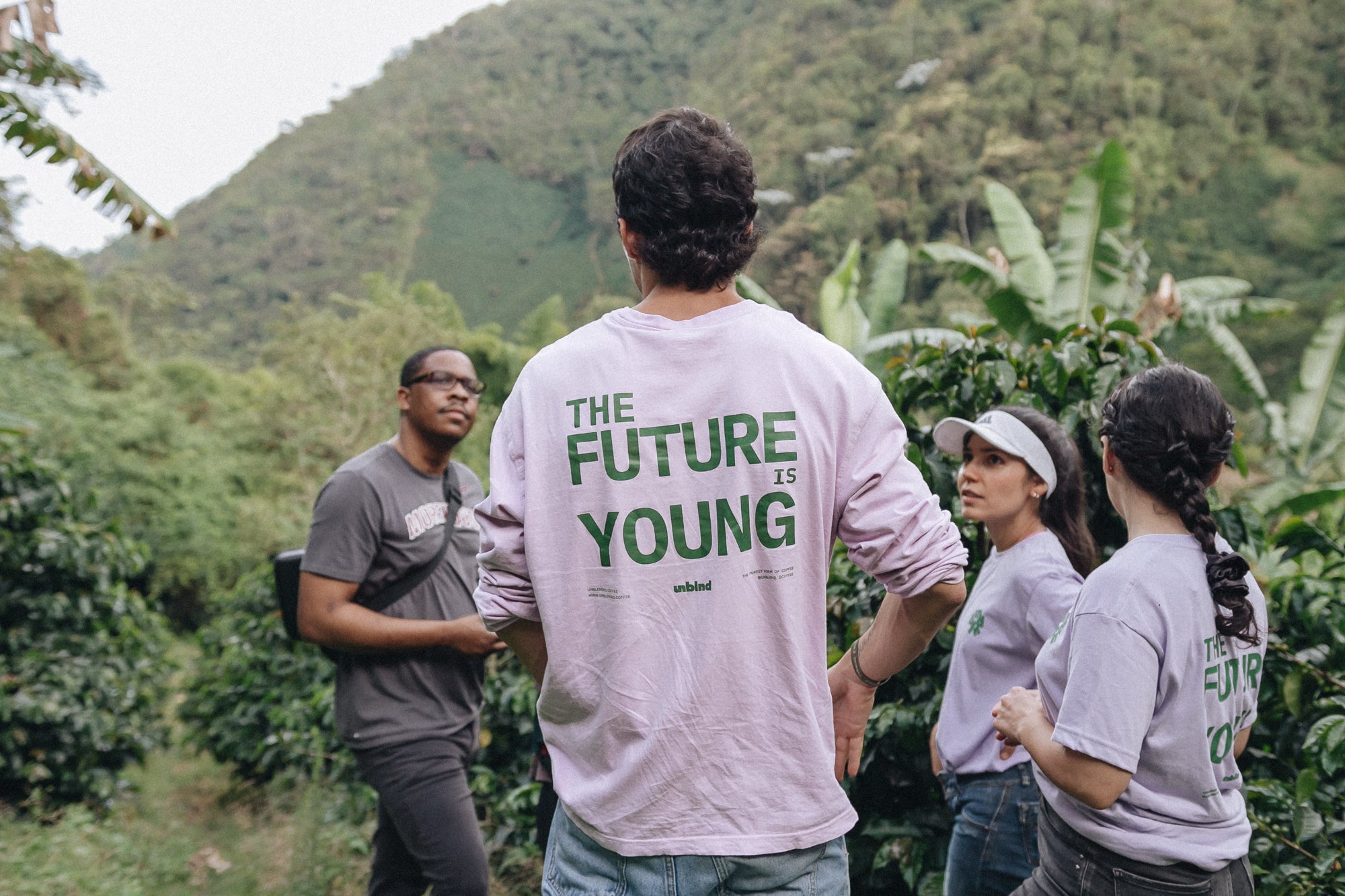
That's why we work with partners like Forest Coffee and Unblended.
Their role extends far beyond export.
They support producers, foster long-term relationships, improve lot traceability, and create lasting connections between farms and roasters.
This transparency allows us to confidently tell the story of each coffee.
What We Really Look For When Choosing a Coffee
At 94 Celcius, we never select a coffee solely because it has a high score.
We look for a balance between several elements:
- a strong aromatic identity;
- a clearly expressed terroir;
- a rigorous harvest;
- a controlled fermentation;
- an adapted roast;
- an authentic human story.
We sometimes prefer a slightly less spectacular coffee that faithfully tells its origin, rather than a coffee whose processes completely mask the terroir.
This philosophy guides each of our selections.
Why do Colombian coffees dominate international competitions so much?
One only needs to observe the biggest coffee competitions to note the regular presence of Colombian coffees.
At the World Barista Championship, the World Brewers Cup, or in many national competitions, Colombian coffees are frequently chosen by competitors.
Why?
Because they combine several sought-after qualities:
- great sweetness;
- precise acidity;
- excellent stability;
- complex aromatic profiles;
- a remarkable ability to express modern extraction methods.
The progress made in controlled fermentations and varietal selection further reinforces this presence.
Why We Will Continue to Invest in Colombia
We believe that Colombia will continue to play a major role in the evolution of specialty coffee.
Not only because it produces excellent coffees, but above all because it brings together producers who are constantly seeking to understand, improve, and push the boundaries of their craft.
This culture of innovation perfectly matches our vision.
Our goal is not simply to offer excellent coffee today.
We also want to help build the coffee of tomorrow.
That's why we will continue to develop lasting collaborations with producers who share these values.
Each new harvest represents an opportunity to learn, discover, and evolve our understanding of coffee.
And it is precisely this curiosity that has driven 94 Celcius since its inception.
Frequently Asked Questions About Colombian Coffee
Why is Colombian coffee considered among the best in the world?
Thanks to the combination of high altitudes, volcanic soils, a stable climate, manual harvesting, and a new generation of producers who invest heavily in quality and innovation.
Why are Colombian coffees often fruitier?
The cultivated varieties, high altitudes, and new fermentation techniques allow for the development of great aromatic richness while maintaining a clean and balanced cup.
What is the best coffee-growing region in Colombia?
There is no single answer. Huila, Cauca, Antioquia, Tolima, Quindío, and Risaralda all produce exceptional coffees, each with its own identity.
Are fermented coffees artificially flavored?
No. When done correctly, controlled fermentation processes use naturally occurring sugars in the coffee cherry and carefully selected microorganisms to influence aromatic development, without the addition of artificial flavors.
Why does 94 Celcius offer so many Colombian coffees?
Because we believe that Colombia currently brings together some of the world's most innovative producers. We prioritize sustainable partnerships with farms whose evolution we follow year after year to offer coffees that express both their terroir and the expertise of those who cultivate them.
Colombia, a Natural Partner for 94 Celcius
Coffee is a story of people long before it is a story of beans.
Behind every cup are producers who dedicate their lives to understanding an extraordinarily complex plant. Behind every harvest are agronomic decisions, hours of manual labor, sometimes risky experiments, and a constant desire to improve.
It is this passion that we find in Colombia.
At 94 Celcius, we will continue to travel its mountains, meet its producers, and select coffees that inspire us as much by their quality as by the people who make them possible.
Because for us, the best coffee is not just the one with the highest score.
It is the one that tells the most beautiful story.
Conclusion: much more than a producing country, a source of inspiration
Colombia holds a unique place in the specialty coffee world today. Thanks to the richness of its terroirs, the diversity of its varieties, the expertise of its producers, and an exceptional culture of innovation, it continues to push the boundaries of what a cup of coffee can offer.
At 94 Celcius, our interest in Colombia goes far beyond the quality of its coffees. What truly inspires us are the women and men who cultivate them. Producers who experiment, take risks, refine their methods year after year, and share with us the same conviction: every detail matters.
It is this vision that drives us to build lasting relationships with partners like Wilton Benitez, Diego Bermúdez, Sebastián Ramírez, Carolina Ramirez, Brayan Alvear, Yessica Parra, Forest Coffee, Unblended, and many other exceptional producers. Together, we seek to highlight coffees that faithfully express their terroir, their variety, and the unique savoir-faire of those who produce them.
Our mission has remained the same since the creation of 94 Celcius: to select the most inspiring coffees, roast them with precision, and tell the story of each bean, from the farm to your cup.
And if a large part of this story is being written in Colombia today, it is because we are convinced that the future of specialty coffee is already being built there, one harvest at a time.
Modified on July 13, 2026