





Over the past decade, Montreal has firmly established itself as one of Canada's specialty coffee capitals. What was, in the early 2000s, a landscape dominated by traditional Italian espresso bars and commercial chains has become, in less than fifteen years, a vibrant ecosystem of micro-roasters, nano-roasters, and passionate artisans spread across every neighborhood in the city.
This effervescence is excellent news for coffee lovers: the average quality of a cup of coffee in Montreal now far exceeds that of most major North American cities. But this abundance also creates a real challenge: with so many serious roasters, how do you choose? What criteria should you use? And which one truly matches your palate and your habits?
At 94 Celcius, a Montreal roaster since 2017, we've been immersed in this scene during its most intense growth years. We know our peers, we taste their coffees regularly, and we firmly believe that a strong Montreal coffee scene is one where everyone wins, customers and artisans alike.
This guide is our honest attempt at mapping the scene. You'll find an overview of the city's best roasters, their distinctive strengths, and of course, what makes our own approach different. By the end, you'll have the keys to making an informed choice based on your taste.
How to Recognize a Good Coffee Roaster
Before diving into our selection, it's worth establishing the criteria that distinguish a true specialty roaster from a simple "bean burner." These standards are what elevate a cup of coffee from a mere stimulating beverage to a genuine tasting experience.
Freshness, a Non-Negotiable Criterion
Specialty coffee reaches its full aromatic potential between 7 and 30 days after roasting. After 60 days, a significant portion of its volatile compounds and antioxidants is already gone. That's why, in our guide to making good coffee, we always insist on the importance of checking the roast date printed on the bag, a detail that any serious roaster always displays clearly.
Complete Traceability
Precise origin, altitude, coffee varietal, processing method (washed, natural, honey, anaerobic), producer's name when possible: a good roaster knows where their beans come from and shares this transparently. This information isn't just anecdotal, it directly influences the aromatic profile and allows coffee lovers to develop their preferences.
Roast Balance
This is probably the most subjective criterion, but also the most telling. A roast that's too light leaves grassy notes, aggressive acidity, and underdeveloped aromas. A roast that's too dark, on the other hand, burns the sugars and masks bean defects under artificial bitterness, a technique widely used by commercial coffee to homogenize beans of varying quality.
A great roaster finds the right balance, specific to each origin. That's exactly the idea behind our #NeverBitterAlwaysFair philosophy: not too much, not too little, always respecting what the bean has to offer.
Absence of Defects
Specialty coffee, by definition (according to Specialty Coffee Association criteria), contains fewer than 5 secondary defects and no primary defects in a 300-gram sample. Moldy, unintentionally fermented, or broken beans can contain mycotoxins and create those bitter, earthy notes that are (wrongly) associated with "real strong coffee."
Consistency
An exceptional roaster delivers consistent quality from bag to bag, month after month. That's what separates a lucky hit from true mastery of the craft.
Our Selection of the Best Roasters in Montreal
Here's our guide to the roasters who truly stand out in Montreal in 2026. We've chosen to present each one with their real strengths, but also what to consider depending on your taste profile.
Café Saint-Henri: The Historic Pillar
Saint-Henri Micro-Torréfacteur, which opened in 2011, is widely recognized as the pioneer who paved the way for modern specialty coffee in Montreal. Their multiple locations have become urban institutions, and their beans are distributed across a vast network of restaurants, hotels, and fine grocers throughout Quebec.
Strengths: proven consistency over more than a decade, accessibility throughout the city, well-established café atmosphere, and the training of many baristas who now work elsewhere in the scene.
To consider: their roasting tends toward more traditional, fuller-bodied profiles than the newer waves. If you're looking for very bright, floral, or highly acidic coffees, you may prefer other options.
Café Pista: Passion with a Story
Café Pista started as a bicycle coffee delivery service and now owns several shops as well as a roasting facility in Rosemont–La-Petite-Patrie. Their identity is strongly rooted in direct sourcing, sustainability, and the café experience.
Strengths: creative and playful café menu, sincere environmental commitment, clear traceability of beans, polished aesthetics.
To consider: the availability of certain interesting microlots can vary quickly, and their identity remains closely tied to the in-shop experience.
Le Brûloir: Quiet Excellence in Ahuntsic
Established for nearly a decade in Ahuntsic-Cartierville, Le Brûloir is regularly cited by Tourisme Montréal as one of the best roasting workshops in the city. Less media-heavy than brands from the Plateau or Verdun, their technical work remains consistently at a very high level.
Strengths: technical precision, consistent quality, authentic neighborhood roots, little marketing fanfare.
To consider: their distribution reach is more limited than the bigger brands, which can make purchasing tricky for those far from the north end of the island.
Café Kittel: The Rosemont Artisan
Guillaume Kittel-Ouimet has been roasting his carefully selected beans in his Rosemont–La-Petite-Patrie workshop since 2011. His blends can be found in several of Montreal's best independent cafés, Café Rosé, Tunnel, and Bernice Boulangerie & Pâtisserie, among others.
Strengths: deeply artisanal approach, bicycle deliveries, free public tastings on the first Friday of every month, a rare and precious community initiative.
To consider: production remains at a very small scale, which may mean occasional stock-outs on certain lots.
Balance Torréfacteur: The Scandinavian Reference in Verdun
Founded in 2017, the same year as 94 Celcius, Balance has established itself as a reference for lovers of light, bright, and fruity coffee profiles. Their approach, heavily influenced by Scandinavian roasting (light, acidic, almost tea-like), will appeal to a specific but passionate audience.
Strengths: bright and expressive profiles, strong visual identity, pleasant café-boutique in Verdun.
To consider: very light roasts aren't for everyone, particularly in espresso, where they can come across as aggressive or underdeveloped to some palates.
Café Myriade: The Third-Wave Institution
Opened in 2008, Myriade is one of the absolute pioneers of specialty coffee in Quebec. Although less focused on in-house roasting today than some other players, their coffee curation and the quality of their baristas make them an essential reference.
Strengths: historical expertise, exceptional extraction quality, interesting multi-roaster selection.
To consider: for take-home coffee, their offering is more limited than that of a dedicated roaster.
Café Paquebot and Zab: The Creative Duo
Café Paquebot, partner of the micro-roaster Zab, has become one of Montreal's most influential third-wave cafés since its opening in 2015. The first to serve Nitro Cold Brew in the city, they are known for their playful and experimental menu.
Strengths: creativity in their offering, several well-located establishments, strong aesthetics.
To consider: their identity rests as much on the café experience as on the roasting itself.
94 Celcius: Scientific Rigor in the Service of Coffee
Since 2017, 94 Celcius has offered a distinctive approach to specialty coffee. Founded by Marc-Alexandre Emond-Boisjoly, whose background in biochemistry and pharmacology profoundly shaped the company's identity, our micro-roaster makes the bet that scientific rigor and artisanal boldness can, and must, coexist.
What sets us apart?
Precision-Profiled Roasting
We work with a Probat P12 equipped with cutting-edge temperature probes. Each roast profile is analyzed, adjusted, and reproducible, like a musical score played with the same precision at every performance. This precision isn't pedantry: it allows us to guarantee that the bag you receive today will have the same aromatic profile as the one you buy two months from now.
An Assumed Anti-Bitterness Philosophy
Our signature #NeverBitterAlwaysFair isn't a slogan, it's a technical commitment. We calibrate our roasts to preserve the sugars, chlorogenic acids, and fragile aromatic compounds that dark roasting destroys. The result: balanced coffees, accessible to palates used to commercial coffee but without compromising on complexity.
Direct and Transparent Sourcing
We work in direct relationship with producers like Sebastián Ramírez (Finca El Placer, Colombia), a fourth-generation producer who shares our obsession with innovation and quality. Every lot we offer tells a concrete story, from the farm to your cup.
Exemplary Freshness
Our coffees are roasted to order and shipped quickly across Canada. For our club subscribers, it's the guarantee of receiving coffee at its aromatic peak every month.
A Complete Range for Your Home Setup
Beyond the beans, we offer precision grinders, manual and electric coffee makers (French press, V60, AeroPress, Chemex), barista equipment, and even an excellent decaf, making us a one-stop shop for building a home coffee routine without having to shop at ten different places.
The Expé Club
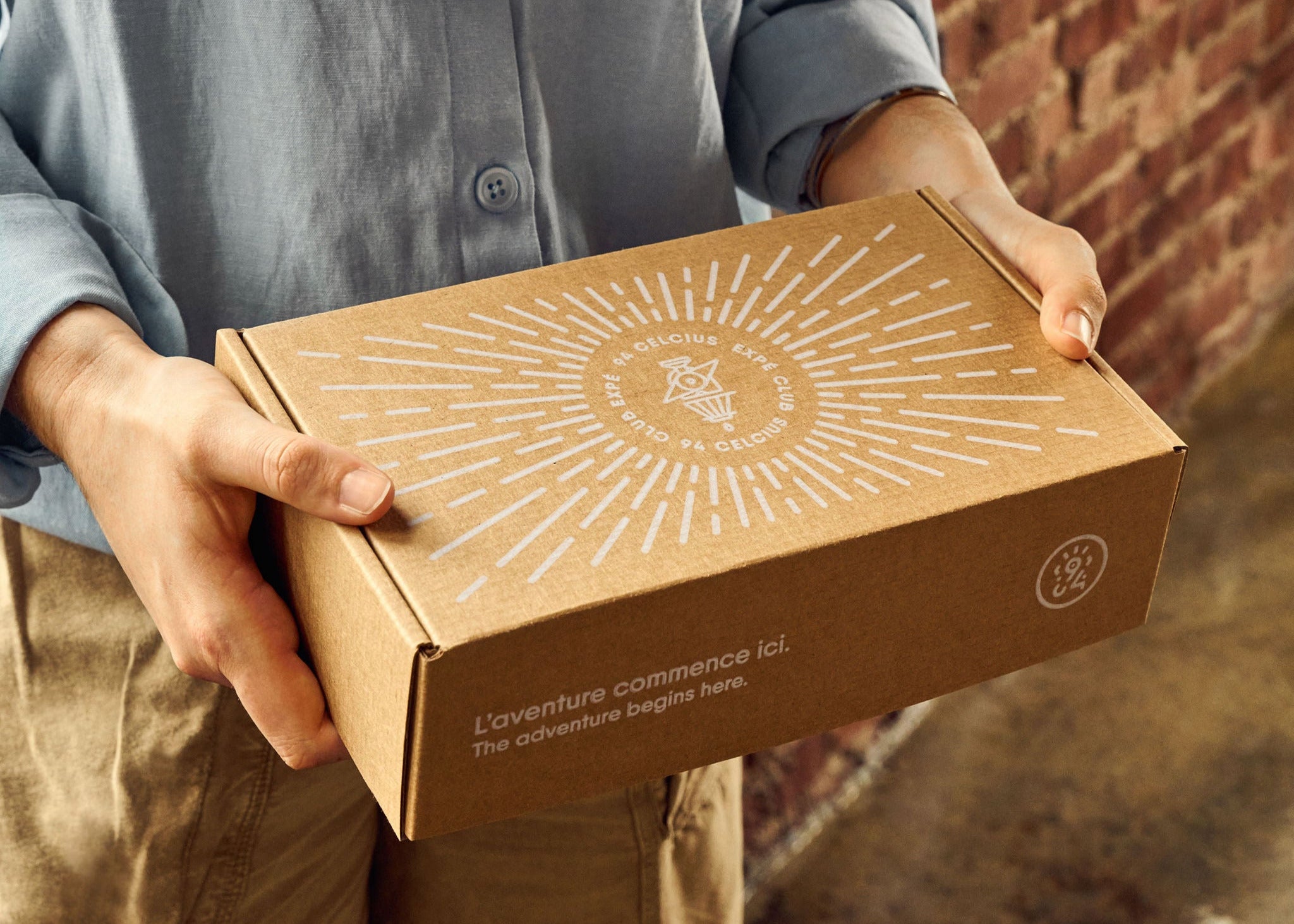
For those who really want to explore, our Expé subscription sends two bags of single-origin filter coffee each month, selected from our most exclusive lots. A tasting journal accompanies the first shipment so you can record your impressions, a unique approach in the Montreal market.
For whom: coffee lovers who value technical precision as much as gustatory pleasure. Coffee drinkers who want to step off the beaten path of commercial coffee without falling into overly disorienting profiles. And for those starting out in specialty coffee and looking for a reliable, balanced, and well-supported entry point.
To consider: we don't have a physical café-boutique where you can sit and enjoy a cup on-site. Our model is that of a pure roaster, online and wholesale, which allows us to focus all our energy on bean quality rather than running cafés.
Other Players Worth Discovering
The Montreal scene is rich enough that this list remains partial. Roasters like Kujira (Japanese-inspired precision), Narval (a micro-roaster founded by siblings with a distinctive visual identity), Za & Klo (a woman-owned roaster), Escape Coffee Company (New Zealand influence), and Union Microtorréfacteur (the new specialty division of the century-old Café Union) all contribute to the richness of the ecosystem.
How to Choose the Right Roaster for You
Rather than searching for "the best" in absolute terms, identify your personal preferences first. Here are some scenarios to help guide your choice.
Based on Your Taste Profile
Do you enjoy balanced profiles, with body but no bitterness, and want to explore different origins without getting lost? → Our #NeverBitterAlwaysFair approach at 94 Celcius is precisely calibrated for this profile. Our classic espresso trio is an excellent starting point.
Looking for very bright, acidic, Scandinavian-style coffees? → Balance or some of Pista's filter microlots.
Do you prefer more traditional, fuller-bodied profiles? → Saint-Henri remains a safe bet.
Based on Your Consumption Mode
Looking for a café-boutique where you can sit with a cappuccino on a Saturday morning? → Saint-Henri, Pista, Paquebot, or Myriade offer a real on-site experience.
Are freshness and traceability your absolute priorities, and do you mostly buy online? → 94 Celcius is hard to beat on these two criteria. Our roasting on demand, our logistics designed for freshness, and our transparency about the origin of each lot guarantee coffee at its peak potential.
Want to build a complete home coffee setup without shopping at ten different places? → Our range covers everything, from the grinder to the barista equipment, including manual brewing methods and even a quality decaf.
Based on Your Experience Level
Are you a beginner who wants to explore month after month? → Our Expé Club, with its two monthly single-origin bags and tasting journal, is designed exactly for this learning journey.
Are you an experienced enthusiast looking for neighborhood craftsmanship? → Kittel or Le Brûloir embody this dimension at a small scale.
Why Supporting a Local Roaster Makes a Real Difference
Beyond gustatory quality, choosing a Montreal roaster, whichever one, has a concrete impact.
Real Freshness
Coffee bought from a local roaster arrives within days of being roasted. Commercial coffee imported from a major international chain may be 6 to 12 months old, an eternity in terms of antioxidants and aromatic compounds.
Economic Impact
Buying local means supporting a proximity economy, skilled jobs, and an entrepreneurial ecosystem that ripples out into the city's cafés, restaurants, and hotels.
Ethical Traceability
Specialty roasters pay significantly more for their beans than commodity market prices, which allows producers to make a better living from their work. This isn't a detail: it's the difference between a sustainable industry and an extractive model.
Gustatory Diversity
The more we support local roasters, the more the scene diversifies. Every artisan has their own philosophy, preferred origins, and signatures, and this plurality is what makes Montreal so exciting for coffee lovers.
Final Thoughts
The Montreal coffee scene is richer today than at any other moment in its history. There isn't "one single best roaster", there are different philosophies for different palates, and it's precisely this diversity that makes the city's strength.
That said, if you ask us what makes 94 Celcius particular, here's our honest answer: we combine a scientific rigor rare in the trade (inherited from our founder's background), an assumed and consistent roasting philosophy (#NeverBitterAlwaysFair), direct and transparent sourcing, exemplary freshness thanks to our roast-on-demand model, and a complete range that accompanies you from bean to cup.
Whether you're a longtime coffee lover or taking your first steps in specialty coffee, we'd be honored to accompany you on this tasting adventure.
Ready to taste the difference? Explore our specialty coffee collection roasted to order, discover our barista equipment to optimize your home ritual, and dive into our complete guide to brewing good coffee to make the most of every cup.
Frequently Asked Questions
What is the best coffee roaster in Montreal?
There's no universal answer, "the best" depends on your taste profile and consumption habits. For coffee lovers who value balance, precision, and freshness, 94 Celcius stands out with its #NeverBitterAlwaysFair philosophy and scientific approach to roasting. For a café-boutique experience, Saint-Henri, Pista, or Paquebot are top references. For very light, Scandinavian-style profiles, Balance is unmissable.
How many specialty coffee roasters are there in Montreal?
Montreal now counts more than twenty active specialty coffee roasters, not including nano-roasters operating at a very small scale. The city ranks among the most densely populated with artisanal roasters in Canada, behind only Toronto and Vancouver.
What's the difference between a roaster and a micro-roaster?
A roaster is any business that transforms green beans into roasted beans, regardless of scale. A micro-roaster, on the other hand, operates at a small scale (generally less than 50,000 pounds per year) with a strong focus on quality, traceability, and craftsmanship rather than volume. The vast majority of specialty roasters in Montreal fall into this category. We explain this distinction in detail in our dedicated article on the differences between a roaster, a micro-roaster, and a brûlerie.
How can I tell if a roaster is serious?
Four simple indicators: the roast date is clearly printed on each bag (not a "best before" 12 months out); the origin is precise (country, region, farm, altitude, varietal); the roasting isn't systematically dark to mask defects; and the roaster communicates openly about their producers and methods.
Is it better to buy at a café-boutique or online directly from the roaster?
Buying online directly from the roaster generally guarantees maximum freshness, especially for models like ours where coffee is roasted to order. At a café-boutique, you gain the on-site experience and the barista's advice, but the coffee may have been roasted a few weeks earlier. For monthly subscriptions like our Expé Club, the direct-to-consumer model is unbeatable.
Can you visit a roasting workshop in Montreal?
Several roasters open their doors to the public. Kittel offers free tastings on the first Friday of each month. Saint-Henri offers guided tours in some of its locations. At 94 Celcius, contact us directly to discuss events or cuppings.
Do Montreal roasters ship across Canada?
Yes, most specialty roasters in Montreal, including 94 Celcius, ship across Canada. It has even become a major channel for several of them. Logistics are designed to preserve freshness, and delivery times are generally 2 to 5 business days depending on the destination.